


















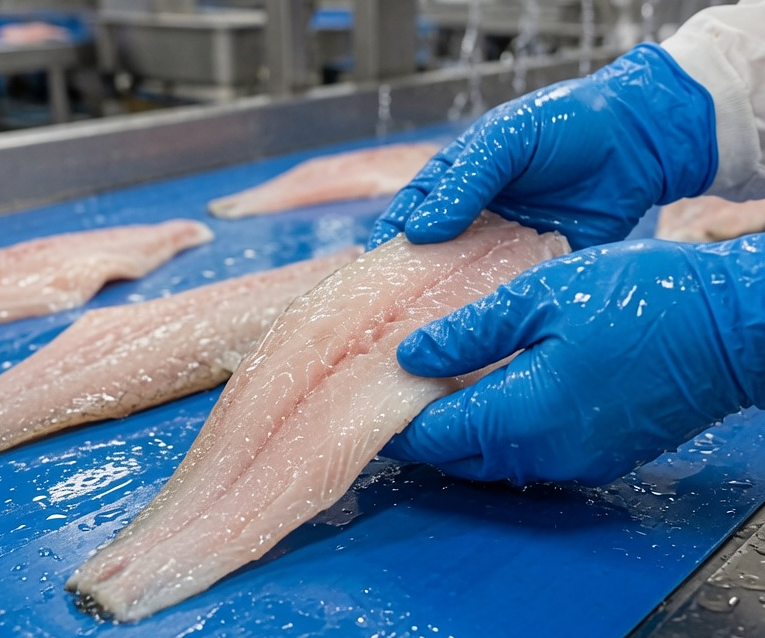
Modern fish processing relies on continuous monitoring of product yield as the primary benchmark for production line efficiency. A key engineering challenge lies in adapting mechanical equipment to the specific anatomical structure of individual fish species—in this case, pikeperch (zander).
To evaluate the operational parameters of two filleting machines, the Baader 187 and Baader 184, their mechanical performance was analyzed. This process can be observed in the following visual material: Watch the Filleting Trials on YouTube.
Technical Specifications & Raw Material Parameters
- Species: Pikeperch (Zander).
- Weight Range: Headed and gutted (H&G) fish weighing between 430g and 520g.
- Initial Condition: Pre-deheaded manually, core temperature maintained between 0 and 4°C.
- Objective: Theoretical evaluation of the correlation between the mechanical design of the machinery and throughput efficiency for a specific size bracket.
Machine Performance Characteristics in Production Conditions
During the tests, the operational performance of both machines was compared, focusing on their impact on filleting quality and overall process flow. Performance efficiency was evaluated based on the precision of separating flesh from the backbone under identical test parameters:
Performance Characteristics of the Baader 187
- Filleting Quality: The machine’s design allows for highly precise guidance of the cutting tools, ensuring that fillets are cleanly separated from the bone structure. This delivers high-quality fillets while minimizing raw material waste.
- Material Flow & Stability: Fish transport remains stable and consistent, ensuring a smooth process, reducing the risk of blockages, and maintaining high throughput on the production line.
Performance Characteristics of the Baader 184
- Filleting Quality: The design of the tail section results in a slightly different cutting profile during bone separation. Consequently, a larger amount of premium meat may remain on the backbone near the collar area, affecting the final yield and filleting profile.
- Material Flow & Stability: The geometry of the transport and scraper elements can, in certain instances, affect how the pikeperch carcass is guided. As a result, occasional short-term stoppages or flow disruptions may occur, requiring operator intervention.
Final Engineering Summary & Recommendations
- For headed and gutted (H&G) pikeperch weighing 430g to 520g: The Baader 187 represents the optimal technological choice. It guarantees maximum raw material recovery and a virtually clean backbone. Within this specific weight bracket, the Baader 184 demonstrates its operational limits, showing a tendency to leave part of the premium meat on the tail and backbone sections.
- For fish weights exceeding 520g: The performance of both mechanical systems on larger raw material requires additional verification. To maintain optimal quality standards for larger and heavier fish, it is highly recommended to conduct separate trials on a larger frame model, such as the Baader 189.
Looking for equipment for your fish processing plant? Explore our selection of fish processing machinery and find the right solution for your production needs.