


















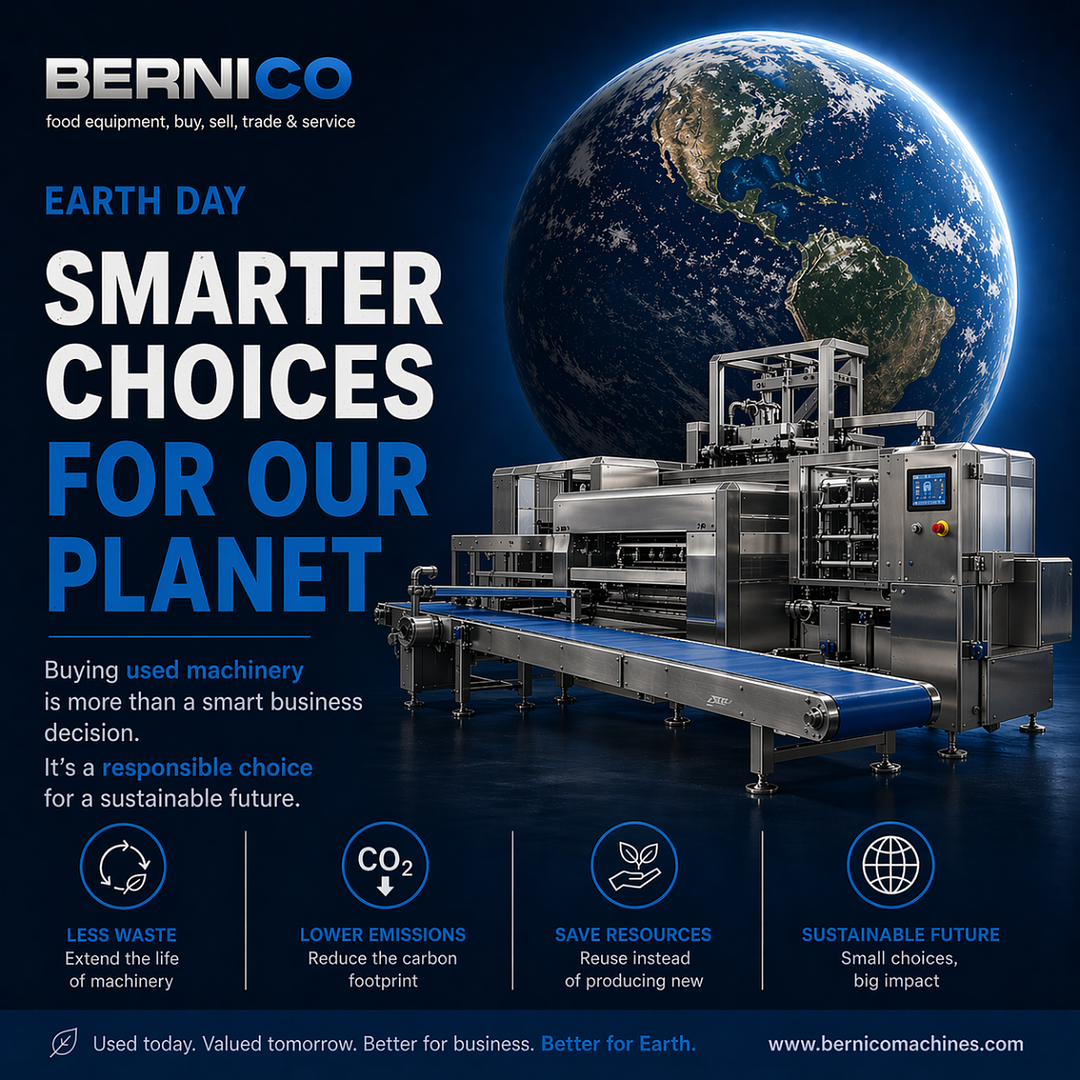
Used food processing machinery is becoming an important part of sustainable production strategies in the food industry.
In today’s industrial landscape, more and more companies are paying attention not only to efficiency, but also to the environmental impact of their decisions. In food processing, this shift is particularly visible, as businesses look for ways to optimize operations while reducing resource consumption and emissions.
Rethinking Equipment Decisions
For years, investing in new equipment has been the primary way to develop production capacity. Today, however, many companies are complementing these investments with alternative approaches.
Used food processing machinery, when properly serviced and prepared for operation, can deliver reliable performance while significantly reducing the environmental impact associated with manufacturing new equipment.
Choosing to reuse, upgrade, or resell equipment is not only a cost-effective solution — it is also a practical step toward more sustainable production.
Real Environmental Impact
Extending the lifecycle of used food processing machinery brings measurable benefits:
✔ reduced industrial waste
✔ lower demand for raw materials
✔ decreased CO₂ emissions linked to the production of new equipment
✔ longer lifecycle of production assets
Every machine that remains in operation instead of being replaced contributes to reducing the overall environmental footprint of the food processing industry.
Efficiency and Sustainability Together
Sustainability does not have to come at the expense of performance.
Used food processing machinery, combined with proper servicing of existing equipment, allows companies to respond more quickly to production needs, optimize capital expenditure, and implement proven solutions without long lead times.
This approach supports both operational efficiency and long-term sustainability goals.
The Bernico Approach
At Bernico, we support companies in sourcing and selling used food processing machinery worldwide. We also help extend the lifecycle of existing equipment through proper evaluation, service, and redeployment.
Each machine that is reused instead of replaced represents a step toward more responsible and resource-efficient production.
Looking Ahead
As the food processing industry continues to evolve, sustainability will play an even greater role in decision-making.
In many cases, the most effective solution is not solely investing in new equipment — but combining new and used food processing machinery in a smarter, more strategic way.